
How to Get Rid of Oily Dandruff Without Stripping Your Scalp
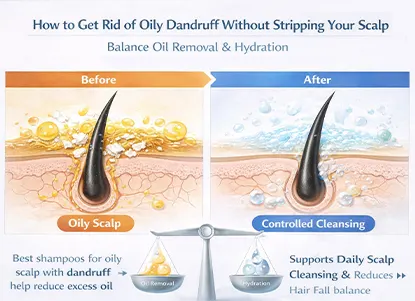
If you have an oily scalp with stubborn dandruff, you already know the struggle. You wash your hair to remove the grease, your scalp feels tight for a few hours, and by the next day, your roots are oily again, with flakes still visible.
This cycle happens because oily dandruff is not just about dirt or poor hygiene. It’s a scalp imbalance.
The solution isn’t harsher cleansing. It’s a smarter, balanced treatment that controls oil while protecting your scalp barrier.
Let’s break down exactly how to treat greasy dandruff without making things worse.
Understanding Oily Dandruff: Why Your Scalp Feels Greasy Yet Flaky
Oily dandruff forms when excess sebum (natural scalp oil) combines with dead skin cells and feeds a yeast called Malassezia. This leads to sticky, slightly yellowish flakes that cling to the scalp instead of falling off like dry dandruff.
Unlike dry dandruff, oily dandruff often comes with:
- Greasy roots within 24–48 hours of washing
- Itchiness that feels “deep” rather than tight
- Clumped flakes that stick to the scalp
- A heavy or coated sensation
Many people make the mistake of attacking oil aggressively. But when you strip your scalp with harsh shampoos, your sebaceous glands respond by producing even more oil — worsening the cycle.
Oily dandruff is about regulation, not elimination.
Key Takeaways:
- Oily dandruff is caused by excess sebum + microbial imbalance.
- Sticky flakes are different from dry, powdery dandruff.
- Over-stripping increases rebound oil production.
- Scalp balance is the real goal.
Is There a Shampoo That Treats Dandruff Without Making My Scalp More Oily?
Yes, but it must do two jobs at once: treat dandruff at the root and regulate oil production without damaging the scalp barrier.
A well-formulated anti-dandruff shampoo contains ingredients that target dandruff-causing microbes while remaining pH-balanced and gentle enough for regular use.
For example, Head & Shoulders is one of the most trusted and popular brands in India for anti-dandruff solutions that remove flakes while maintaining scalp comfort. Head & Shoulders Deep Cleanse shampoo is designed not to overdry the scalp, which is essential for oily dandruff sufferers. It is powered with the detoxifying benefits of oxygenated charcoal and anti-dandruff properties of piroctone olamine that gives 100% freedom from oily dandruff and prevents it from coming back.
When choosing a shampoo, look for:
- Clinically proven anti-dandruff actives
- Oil-control claims
- “Suitable for daily use” or “gentle formula.”
- pH-balanced labelling
Avoid:
- Extremely harsh clarifying shampoos for daily use
- High-alcohol formulas
- DIY remedies that are used too frequently
The right shampoo should leave your scalp feeling clean but not tight.
Key Takeaways:
- Yes, dandruff can be treated without increasing oiliness.
- Balanced anti-dandruff shampoos regulate oil instead of stripping it.
- Tight, squeaky-clean feeling = possible over-cleansing.
- Consistency matters more than intensity.
What Shampoo Removes Dandruff Flakes from an Oily Scalp Quickly?
If you want fast, visible results, technique matters just as much as product choice.
Even the best anti-dandruff shampoo won’t work if you rinse it out too quickly.
Here’s how to maximise results:
- Apply directly to the scalp, not just hair lengths.
- Massage gently with fingertips (not nails).
- Leave it on for at least 2–3 minutes.
- Rinse thoroughly.
Shampoos designed for oily dandruff help loosen sticky flakes while reducing excess sebum. This dual action allows flakes to lift off more easily without aggressive scrubbing.
Within a few washes, you should notice:
- Fewer visible flakes
- Reduced itchiness
- Roots that stay fresher for longer
Quick results come from proper usage — not harshness.
Key Takeaways:
- Leave shampoo on for 2–3 minutes.
- Focus on the scalp, not the hair ends.
- Gentle massage beats aggressive scrubbing.
- Visible improvement usually starts within a few washes.
Which Anti-Dandruff Shampoo Controls Oil and Flakes?
The ideal anti-dandruff shampoo for a greasy scalp should:
- Target dandruff-causing microbes
- Regulate sebum production
- Maintain scalp hydration
- Prevent rebound oiliness
Many people assume anti-dandruff shampoos dry the hair. However, modern formulations — including those from Head & Shoulders — are designed to cleanse deeply while keeping the scalp barrier intact.
If your lengths feel dry, it’s usually due to improper conditioning, not the anti-dandruff shampoo itself.
Smart tip:
- Apply conditioner only from mid-length to ends.
- Never massage the conditioner into the scalp.
- Use lightweight formulas if you have fine hair.
Oil control and hydration are not opposites — they must coexist for long-term scalp health.
Key Takeaways:
- Oil control and flake control should happen together.
- Modern anti-dandruff shampoos are not meant to overdry.
- Conditioner placement makes a big difference.
- Balanced scalp = less oil over time.
Oily Scalp Dandruff Treatment Without Harsh Chemicals
If you’re searching for an oily scalp dandruff treatment without harsh chemicals, focus on safety and clinical testing rather than “chemical-free” marketing claims.
DIY treatments like lemon juice, baking soda, apple cider vinegar, and toothpaste can disrupt scalp pH and irritate when overused. A damaged scalp barrier often produces more oil as a defence response.
Instead:
- Use a dermatologically tested anti-dandruff shampoo.
- Avoid excessive oil massages.
- Limit heavy styling products.
- Wash pillowcases regularly.
Gentle science-backed care is far more effective than aggressive home hacks.
Key Takeaways:
- “Chemical-free” is often misleading.
- DIY acids can disrupt scalp balance.
- Clinical formulations are safer and more reliable.
- Scalp barrier health determines oil production.
Best Way to Treat Greasy Dandruff Without Over Washing
Over-washing is one of the most common mistakes people with oily dandruff make.
Washing daily with strong cleansers can:
- Strip natural oils
- Trigger rebound oil production
- Irritate the scalp
- Increase flake formation
A balanced routine looks like this:
- 2–3 times per week: Use a targeted anti-dandruff shampoo.
- On non-wash days: Avoid heavy oils and excessive styling products.
- Lifestyle support:
- Manage stress levels
- Maintain a balanced diet
- Avoid very hot showers
The goal is oil regulation, not oil removal. When your scalp feels balanced, oil production naturally stabilises.
Key Takeaways:
- Wash strategically, not excessively.
- Rebound oil is caused by over-cleansing.
- Consistency builds long-term control.
- Balanced care prevents flare-ups.
Final Thoughts: Stop Stripping, Start Balancing
Oily dandruff doesn’t require aggressive treatment. It requires intelligent scalp care.
When you:
- Use a clinically proven anti-dandruff shampoo
- Allow proper contact time
- Avoid harsh DIY remedies
- Maintain a consistent routine
Trusted brands like Head & Shoulders continue to lead the way in anti-dandruff care by focusing on effective flake removal without compromising scalp comfort — which is especially important in humid Indian climates where oil production is naturally higher.
Healthy scalp care is not about feeling squeaky clean. It’s about feeling balanced.
FAQs
1. How to remove oily scalp dandruff?
Use a clinically proven anti-dandruff shampoo 2–3 times a week, leave it on for a few minutes before rinsing, and avoid heavy oiling or harsh DIY remedies that can worsen grease and flakes.
2. Is dandruff 100% curable?
Dandruff is a recurring scalp condition, but it can be fully controlled with the right routine. Head & Shoulders Deep Cleanse Shampoo with oxygenated charcoal helps give up to 100% freedom from oily, sticky dandruff when used regularly, by deeply cleansing the scalp while targeting the root cause of flakes.
3. Why is my dandruff so oily?
Oily dandruff happens when excess sebum mixes with dead skin cells and feeds scalp yeast, creating sticky, greasy flakes instead of dry white ones.
4. When I scratch my scalp, what is that white stuff I get in my nails?
That white residue is usually a mix of dead skin cells, sebum (oil), and dandruff flakes — a sign your scalp needs proper anti-dandruff treatment, not scratching.