
How to Reduce Dandruff before it Damages Your Hair
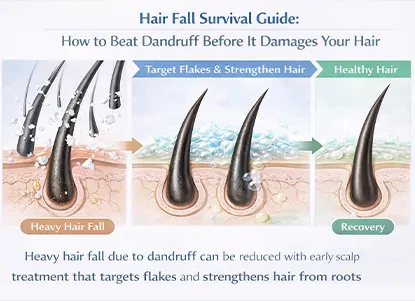
Hair fall is a common concern, and it often becomes more noticeable when dandruff appears. Flakes, itching and scalp irritation do more than cause discomfort. Over time, they weaken the scalp environment, making hair more prone to breakage. If dandruff remains untreated, hair fall can increase gradually across seasons.
Understanding why dandruff worsens in certain weather conditions and choosing the right scalp care approach helps protect hair before visible damage occurs.
How Dandruff Contributes to Hair Fall
Dandruff develops when the scalp’s natural balance is disrupted. A yeast called Malassezia feeds on excess scalp oils and triggers irritation, flaking and itching. While dandruff does not directly affect hair roots, the inflammation it causes weakens the scalp barrier.
Frequent scratching increases friction and stress on hair strands, leading to breakage. Ongoing irritation may also interfere with the normal hair growth cycle, making hair shed more easily. Addressing dandruff early helps reduce hair fall linked to scalp stress and breakage.
Key takeaways
- Dandruff disrupts the scalp’s natural barrier
- Itching and scratching weaken hair strands
- Inflammation affects the hair growth cycle
- Early scalp care helps prevent breakage-related hair fall
What Causes Dandruff?
Dandruff develops when the scalp’s natural balance is disrupted, causing skin cells to shed faster than usual. This leads to visible flakes, itching and scalp discomfort. Several everyday factors can trigger dandruff, and these triggers often become stronger during seasonal changes. Weather conditions, scalp oil levels, lifestyle habits and hair care routines all influence how the scalp behaves. Understanding these causes helps manage dandruff more effectively before it begins to affect overall scalp health and hair strength.
Excess Oil Production on the Scalp
An oily scalp is one of the most common contributors to dandruff. Natural scalp oils help protect hair, but when oil production becomes excessive, it creates an environment where dandruff develops more easily.
Oil build-up traps dead skin cells and dirt on the scalp. Over time, this mixture forms flakes that become visible on hair and clothing. Frequent sweating, hormonal changes and irregular hair washing can all increase scalp oil levels.
Product Build-Up and Scalp Irritation
Using multiple styling products can also contribute to dandruff. Residue from gels, sprays, dry shampoos or heavy oils may accumulate on the scalp over time. This build-up blocks pores and interferes with the scalp’s natural renewal cycle.
When products are not rinsed thoroughly, they may also irritate the scalp and cause itching. Scratching worsens flaking and may weaken hair strands.
Weather Changes and Seasonal Scalp Stress
Seasonal transitions often trigger dandruff because the scalp struggles to adjust to changing environmental conditions. Each season affects scalp health differently.
-
Monsoon and Humid Weather: High humidity increases sweat and oil on the scalp. When moisture remains trapped, it creates an environment where dandruff-causing microbes multiply more easily. This often leads to increased itching and flaking during the rainy season.
-
Winter and Dry Air: Cold temperatures and low humidity strip natural moisture from the scalp. Dryness causes irritation, tightness and visible flakes. Indoor heating can further reduce scalp hydration, making dandruff more noticeable.
-
Hot and Sunny Weather: Heat increases sweat and oil production. When sweat mixes with dust and pollutants, it can clog pores and irritate the scalp. Excess oil also creates conditions that allow dandruff to worsen.
Key takeaways
- Dandruff occurs when the scalp sheds skin cells faster than normal, leading to visible flakes and irritation.
- Weather changes such as humidity, heat and cold temperatures can disrupt scalp balance and trigger dandruff.
- Excess scalp oil and sweat create conditions that allow flakes to develop more easily.
- Product build-up and improper hair washing habits may worsen scalp irritation and flaking.
- Maintaining a consistent scalp care routine helps control dandruff and supports overall scalp health.
What to Use When Dandruff Leads to Hair Fall
When dandruff begins to affect hair strength, choosing the right shampoo becomes an important part of scalp care. An effective approach focuses on controlling flakes at the scalp level while reducing hair fall caused by breakage. Ingredients that target the root cause of dandruff while maintaining scalp balance are especially helpful in these situations.
One such ingredient widely used in anti-dandruff formulations is piroctone olamine. It works by helping control the microorganisms associated with dandruff, which reduces visible flakes and scalp irritation. By supporting a cleaner and more balanced scalp environment, piroctone olamine helps reduce itching and flaking while allowing the scalp barrier to recover. When the scalp feels healthier and less irritated, hair strands are also less likely to weaken and break.
Head & Shoulders Anti-Hairfall Anti-Dandruff Shampoo is formulated with piroctone olamine, helping fight dandruff at its source while supporting a healthier scalp environment. With regular use, the shampoo helps reinforce weakened hair strands, making them more resilient to everyday breakage.
Its gentle, daily-friendly formula cleanses the scalp without feeling heavy, while a light, fresh fragrance keeps hair feeling clean and comfortable. Used consistently, it supports scalp protection and stronger-looking hair, especially when dandruff contributes to seasonal hair fall.
Key takeaways
- Use anti-dandruff shampoos with clinically proven actives
- Choose formulas that also strengthen hair
- Massage gently and rinse thoroughly
- Avoid heavy oiling during active dandruff
- Use lightweight, soothing scalp-care products
When to Consult a Dermatologist
If dandruff persists despite regular care, professional advice is important. Severe itching, redness or sudden hair loss may indicate an underlying scalp condition that requires medical treatment. Dermatologists can recommend medicated shampoos or targeted treatment plans to prevent long-term scalp damage.
Key takeaways
- Flakes do not improve with regular care
- Itching becomes severe or persistent
- Redness or swelling appears
- Hair fall feels excessive or uneven
Final Thoughts
Dandruff-related hair fall is manageable with timely and consistent care. Seasonal changes, humidity, dryness and heat all affect scalp health in different ways. By addressing dandruff early and maintaining a balanced scalp routine, hair remains stronger and more resilient throughout the year.
A healthy scalp forms the foundation for healthier-looking hair, making dandruff control an essential step in reducing hair fall before it progresses.