
Severe Dandruff vs Everyday Dandruff: Why Different Ingredients Are Used
A regular haircare routine can keep your hair feeling clean, smooth, and manageable. But when dandruff becomes persistent, with recurring flakes, itching, or a visibly affected scalp, simply following your usual routine may not be enough.
The difference lies in what you are trying to address. Everyday haircare focuses mainly on maintaining the condition of your hair and scalp, while severe dandruff may require targeted ingredients that help manage the underlying scalp concern.
This is why the ingredients in an everyday shampoo may differ from those used in products formulated for persistent dandruff. Each serves a different purpose, depending on the needs of your scalp.
What Does an Everyday Haircare Routine Focus On?
An everyday haircare routine is mainly designed to maintain the overall condition and appearance of your hair and scalp. It can include regular shampooing, conditioning, and products that help keep hair feeling clean, smooth, and manageable.
The ingredients used in everyday haircare products are generally selected to cleanse the scalp, remove excess oil and buildup, and condition the hair. Depending on your hair type, you may also look for ingredients that provide moisture, softness, or easier manageability.
Key takeaway:
- Everyday haircare focuses on maintaining clean, manageable, and healthy-looking hair.
- Cleansing and conditioning are usually the main priorities.
- The products you choose can vary depending on your hair and scalp needs.
What Makes Dandruff Severe?
Severe dandruff is not simply a matter of having a few visible flakes. When flaking is persistent or keeps returning despite a regular haircare routine, your scalp may need more targeted care.
In most cases, dandruff is driven by three overlapping factors: an overgrowth of a naturally occurring yeast called Malassezia, excess scalp oil (sebum) that feeds it, and an inflammatory reaction in sensitive individuals. The yeast breaks down sebum into fatty acids that irritate the scalp, speeding up skin-cell turnover. The result is visible flakes, itching, and sometimes redness.
Severe dandruff, often a form of seborrheic dermatitis, goes further. It can bring thick, greasy scales, persistent itching, and red patches and flaking beyond the scalp, such as around the eyebrows, ears, and sides of the nose. Because the cause is biological, a conditioning shampoo alone won't fix it.
This is where everyday shampoo may not be enough. Anti-dandruff shampoos can contain specific active ingredients designed to help manage the underlying factors associated with dandruff.
Key takeaway:
- Severe or persistent dandruff may require more targeted scalp care.
- Malassezia is associated with dandruff and can contribute to recurring flaking.
- Anti-dandruff products use specific active ingredients to address dandruff rather than simply cleansing the hair.
Everyday Haircare vs Severe Dandruff: What Is the Difference?
| Everyday Haircare | Severe Dandruff Care |
|---|---|
| Focuses on cleansing and conditioning. | Focuses on managing persistent dandruff. |
| Helps remove everyday oil and buildup. | Uses targeted anti-dandruff ingredients. |
| Suitable for routine hair maintenance. | Designed for scalp concerns involving recurring flakes. |
| Ingredients may focus on moisture and manageability. | Ingredients may target factors associated with dandruff. |
| Product choice depends mainly on hair and scalp type. | Product choice depends on the nature and severity of dandruff. |
The distinction is important because using a regular shampoo when you have persistent dandruff may not address the specific scalp concern. Similarly, using targeted anti-dandruff products when you only need everyday cleansing may not be necessary.
Key takeaway:
- Everyday haircare focuses on routine cleansing and conditioning, while severe dandruff care targets persistent scalp concerns.
- Anti-dandruff shampoos contain targeted ingredients that regular shampoos may not have.
Why Are Different Ingredients Used for Dandruff?
Anti-dandruff products contain active ingredients that target the underlying causes. In many countries, these are regulated as medicated or drug-like products, with specified concentrations.
- Selenium sulfide slows skin-cell turnover while also controlling yeast.
- Piroctone olamine is an antifungal agent that curbs Malassezia growth and soothes itching. It is gentle enough for frequent use and is common in newer, milder anti-dandruff formulas.
- Zinc pyrithione has antifungal and antibacterial effects and suits mild-to-moderate dandruff and regular maintenance.
- Salicylic acid is a keratolytic that softens and loosens thick scales so they can be washed away. It can be drying, so it's often paired with a moisturising product.
- Coal tar slows excessive cell production and calms inflammation, though it can have a strong odour and may stain light hair.
These actives need time on the scalp to work, which is why labels usually tell you to massage in and leave for a few minutes before rinsing.
Key takeaway:
- Anti-dandruff shampoos use specific active ingredients to target factors associated with dandruff.
- Ingredients such as selenium sulfide, piroctone olamine and salicylic acid serve different purposes.
- These products often need to remain on the scalp for a few minutes to work effectively.
Which Anti-Dandruff Shampoo Is Right for Your Scalp?
The right anti-dandruff shampoo depends on the severity of your dandruff and what your scalp needs. If you are looking for regular dandruff care, a shampoo formulated with Piroctone Olamine can be a suitable option. Head & Shoulders 7 in 1 Anti Dandruff Shampoo is designed to provide everyday dandruff care while also helping keep the scalp and hair clean and manageable. It can be considered when recurring flakes are a concern but you are looking for an option that fits easily into your regular haircare routine.
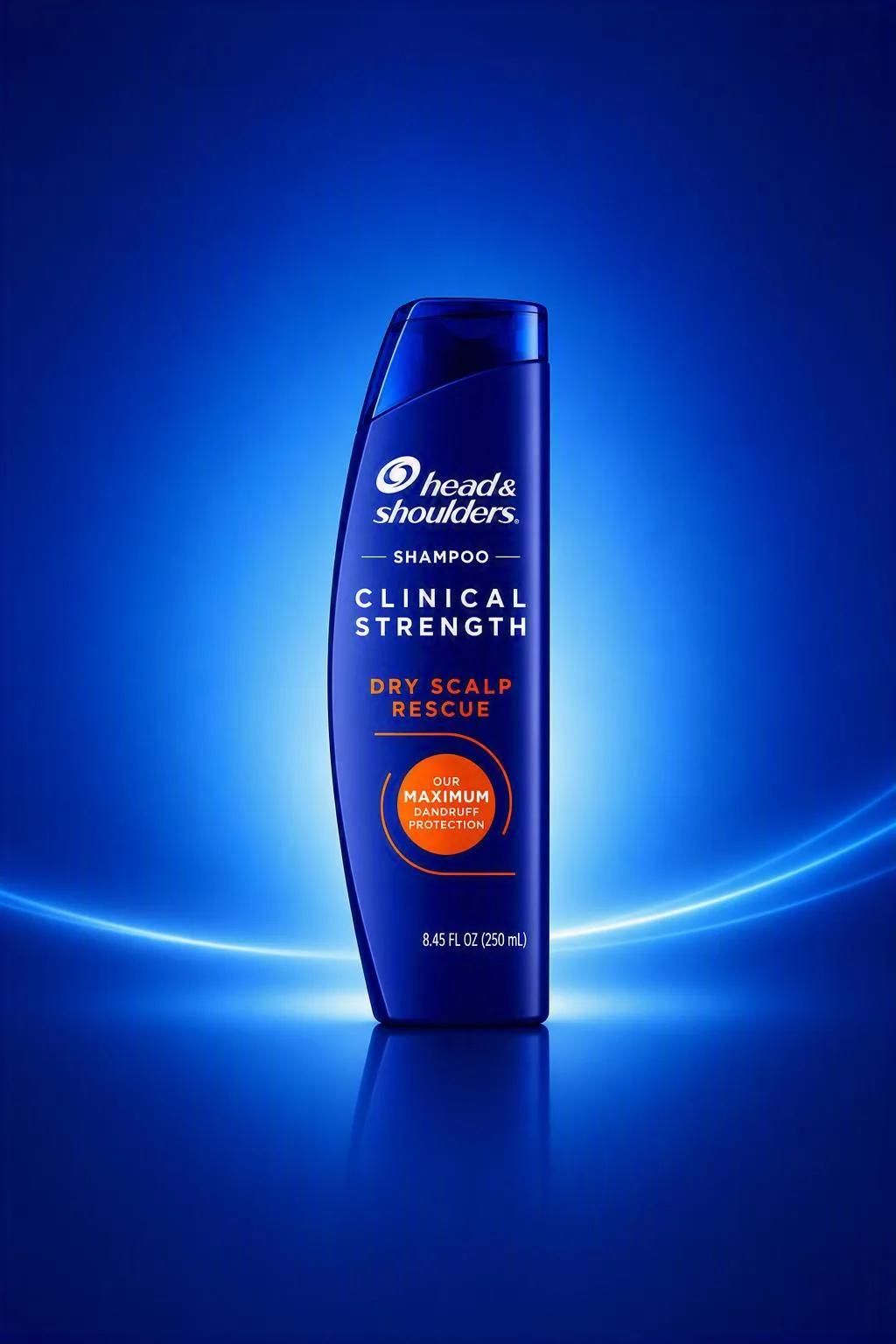
For more persistent or severe dandruff, you may need a shampoo formulated with a different active ingredient. For severe and persistent dandruff, the Head & Shoulders Clinical Strength range offers targeted options based on your scalp concern. Both Clinical Strength Cooling Itch Relief Shampoo and Clinical Strength Dry Scalp Rescue Shampoo contain 1% Selenium Sulfide, which helps target Malassezia, the yeast associated with dandruff. The Cooling Itch Relief variant is suited to severe dandruff with persistent itching, while the Dry Scalp Rescue variant is better suited to dry scalp with stubborn dandruff. This allows you to choose the variant that best matches your scalp concern.
The choice between the two ultimately depends on your scalp concern and the type of dandruff care you need. If dandruff persists or you experience significant redness, soreness or irritation, consider speaking to a dermatologist, as these symptoms can sometimes be linked to other scalp conditions.
Key takeaway:
- Regular dandruff care may suit recurring flakes that are not particularly stubborn.
- More persistent dandruff may call for a targeted active such as selenium sulfide.
- If dandruff persists with significant redness, soreness or irritation, professional advice may be needed.
Building a Routine That Uses Both
Managing dandruff does not mean giving up your regular haircare routine. The key is to give your scalp the targeted care it needs while continuing to care for the lengths and ends.
- Start with targeted care: Use your anti-dandruff or medicated shampoo as directed, focusing on the scalp where flakes and buildup occur.
- Condition the lengths: Apply conditioner mainly to the mid lengths and ends to keep the hair feeling soft without adding unnecessary product to the scalp.
- Combine products when appropriate: Once flaking improves, you may be able to alternate your anti-dandruff shampoo with a gentle everyday shampoo, depending on the product directions.
- Keep up the routine: Dandruff can return when care is stopped too soon, so consistency is important for managing recurring flakes.
- Consider a different active ingredient when needed: If your current anti-dandruff shampoo is not giving you the desired results, speak to a dermatologist about whether a different active ingredient may be more suitable.
Key takeaway:
- Start with the targeted dandruff treatment as directed, then condition the lengths and ends.
- An everyday shampoo can be alternated with an anti-dandruff shampoo when appropriate.
- Consistency matters because dandruff can return when care is stopped too early.
When to See a Doctor
If you've used an over-the-counter anti-dandruff shampoo consistently for several weeks without improvement, or if you notice intense itching, painful redness, oozing, hair loss, or spreading patches, see a dermatologist. Conditions such as psoriasis, eczema, or fungal infections can look like dandruff but need different treatment. A professional can prescribe stronger options and rule out other causes.
Key takeaway:
- See a dermatologist if dandruff does not improve after consistent use of an anti-dandruff shampoo.
- Painful redness, oozing, hair loss, or spreading patches warrant professional attention.
- A dermatologist can rule out conditions that may look similar to dandruff, such as psoriasis or eczema.
Conclusion
Everyday haircare and severe dandruff care serve different purposes, so the ingredients and formulations used for each can vary. Regular shampoos focus on cleansing the scalp and keeping hair clean and manageable, while anti-dandruff shampoos use targeted active ingredients to help manage persistent flakes and related scalp concerns.
The right choice depends on what your scalp needs. Occasional flakes may be managed with regular dandruff care, while recurring flakes, itching, or irritation may call for a more targeted anti-dandruff shampoo. A good routine is about choosing the right level of care rather than the strongest product. Use your shampoo as directed, and if dandruff persists or symptoms become severe, consult a dermatologist for appropriate guidance.
FAQs
1. Can regular shampoo get rid of severe dandruff?
Regular shampoo can cleanse the scalp and remove oil and buildup, but it may not be enough to manage persistent or severe dandruff. Anti-dandruff shampoos contain active ingredients specifically intended to address dandruff.
2. What is the difference between regular shampoo and anti-dandruff shampoo?
Regular shampoo is mainly designed to cleanse the hair and scalp, while anti-dandruff shampoo contains targeted active ingredients that help manage dandruff and recurring flakes.
3. Why does severe dandruff need different ingredients?
Severe or persistent dandruff can involve factors such as Malassezia, excess scalp oil, and inflammation. Targeted anti-dandruff ingredients are formulated to address these factors rather than simply cleansing the scalp.
4. Is anti-dandruff shampoo better than regular shampoo?
Neither is universally better. Regular shampoo can be suitable for everyday cleansing, while anti-dandruff shampoo is designed for people dealing with dandruff. The right choice depends on your scalp needs.
5. How often should I use anti-dandruff shampoo for severe dandruff?
The recommended frequency varies by product and active ingredient. Always follow the instructions on the shampoo label or your dermatologist's advice.